
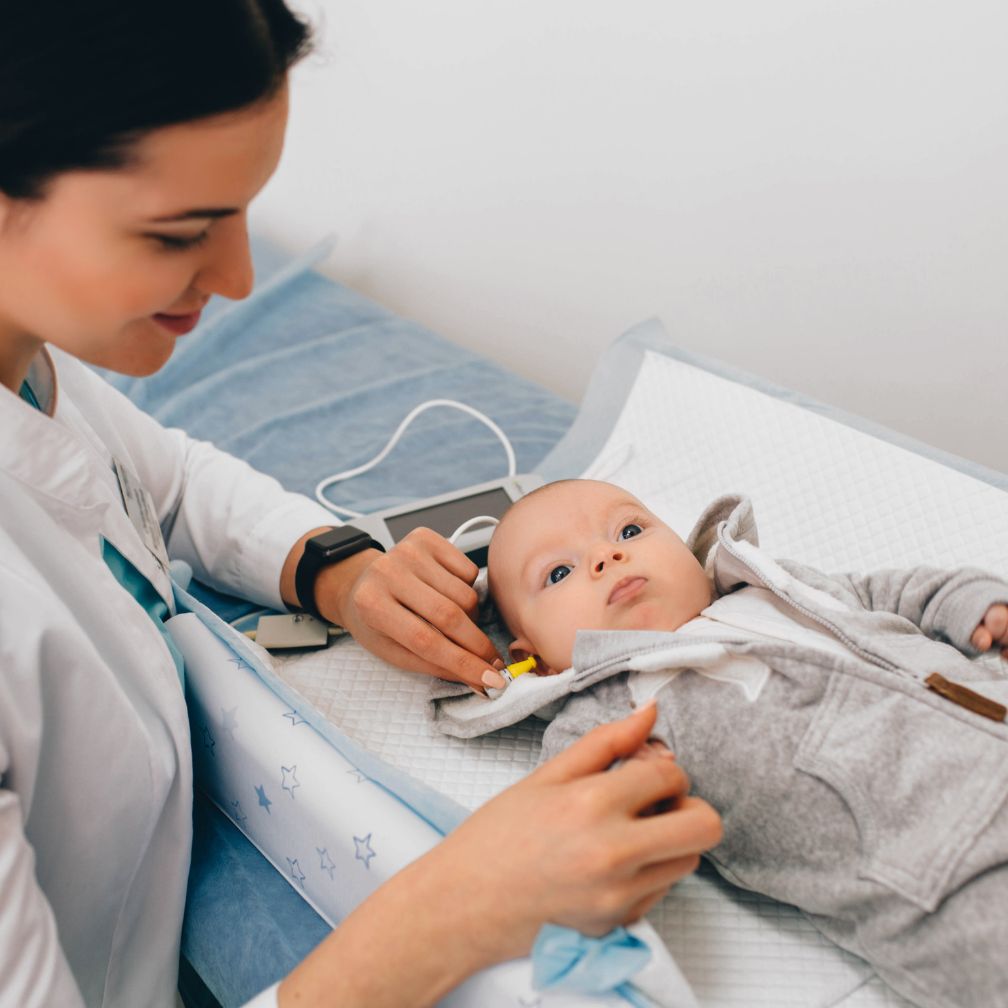
For mothers and fathers of newborns, receiving news of an infant’s hearing impairment brings considerable anxiety and dread. Yet the encouraging reality remains that owing to swift diagnosis and early care, infants experiencing hearing loss will effortlessly thrive. Positively, these infants can master verbal abilities, social skills, and solid bonds within their surroundings, cultivating a deeply rich existence!
Two of the most effective tools for assisting infants with hearing loss include custom hearing aids and cochlear implants. Further in this guide, we review how they work and how to know which option is right for your child.
Analyzing Infant Auditory Deficits
Auditory loss among newborns can stem from various underlying sources, including:
- Spontaneous genetic mutations (even within bloodlines having zero background of impairment)
- Active congenital infections including cytomegalovirus (CMV) or rubella
- Birth-related trauma, including neonate oxygen loss or preterm birth
- Select therapeutic drugs utilized within neonatal intensive care units
The most important step? Prompt clinical identification. Consequently, newborns across United States medical centers receive official hearing checks before going home. Experienced pediatric audiologists active execute the standardized “1-3-6” care benchmark:
- Preliminary auditory screening conducted within 30 days post-birth
- Detailed comprehensive diagnosis finalized inside 90 days of life
- Comprehensive management (employing modern technology or rehabilitation) established prior to 6 months
Reaching these structural checkpoints provides infants their most promising outcome regarding speech acquisition, language mastery, and intellectual development. Whenever you desire advice on these diagnostic stages, your primary pediatrician remains ready to assist!
Hearing Aids for Infants
For babies presenting with mild to severe auditory impairment, programmed hearing aids generally provide the primary therapeutic standard. These compact, customized units elevate environmental sound levels, enabling babies to catch human speech and environmental audio more distinctly.
Custom infant-adapted hearing aids act as:
- Exceptionally safe for direct use on newborns merely weeks post-birth
- Built with soft, flexible ear impressions that adapt smoothly during physical growth
- Equipped with child-resistant battery compartments and specialized pediatric safety components
- Custom-calibrated by a pediatric hearing practitioner to match your baby’s specific auditory profile
As an infant expands physically, their wearable units will require frequent clinical updates to ensure snug placement and optimal performance.
Pediatric Cochlear Implants: An Advanced Solution
In cases where a baby suffers from profound sensorineural hearing deficits that fails to respond adequately to conventional hearing aids, a cochlear implant may be recommended. Diverging from standard hearing aids, cochlear implant devices:
- Require surgical implantation within the auditory bone structure to connect with the auditory nerve
- Direct signals past non-functional hair cells inside the cochlea
- Convert sound into electrical signals that stimulate the auditory nerve directly
Modern cochlear implant systems operate as:
- Officially sanctioned by the FDA for young children aged 9 to 12 months and older
- Extremely effective when integrated with early speech therapy and active home engagement
- Advised exclusively after thorough diagnostic testing by a pediatric audiology clinician and an ENT physician
Such a comprehensive process requires high-resolution imaging, comprehensive audiometric testing, and realistic discussions regarding long-term developmental milestones.
Evaluating Hearing Aids Against Cochlear Implants
- Mild to severe levels of impairment utilize Hearing Aids; Severe to profound auditory destruction warrants Cochlear Implants
- Non-Invasive wearable application: Hearing Aids; Surgical insertion required: Cochlear Implants
- Acoustic sound amplification: Hearing Aids; Direct conversion to electrical signals: Cochlear Implants
- Starts at Infancy: Hearing Aids; Starts at 9-12 Months: Cochlear Implants
Final Takeaways: Navigating Infant Hearing Solutions
In the event your infant receives a hearing loss diagnosis, rest assured that clear options and dedicated expert support. Under the care of specialized pediatric hearing doctors, countless infants successfully cultivate speech and language proficiency that rivals their normal-hearing peers.
Whether your child is a candidate for hearing aids or cochlear implants, early management can make a lifelong difference.
Have questions about your baby’s hearing health? Call our clinic today for a full evaluation and personalized care plan.