
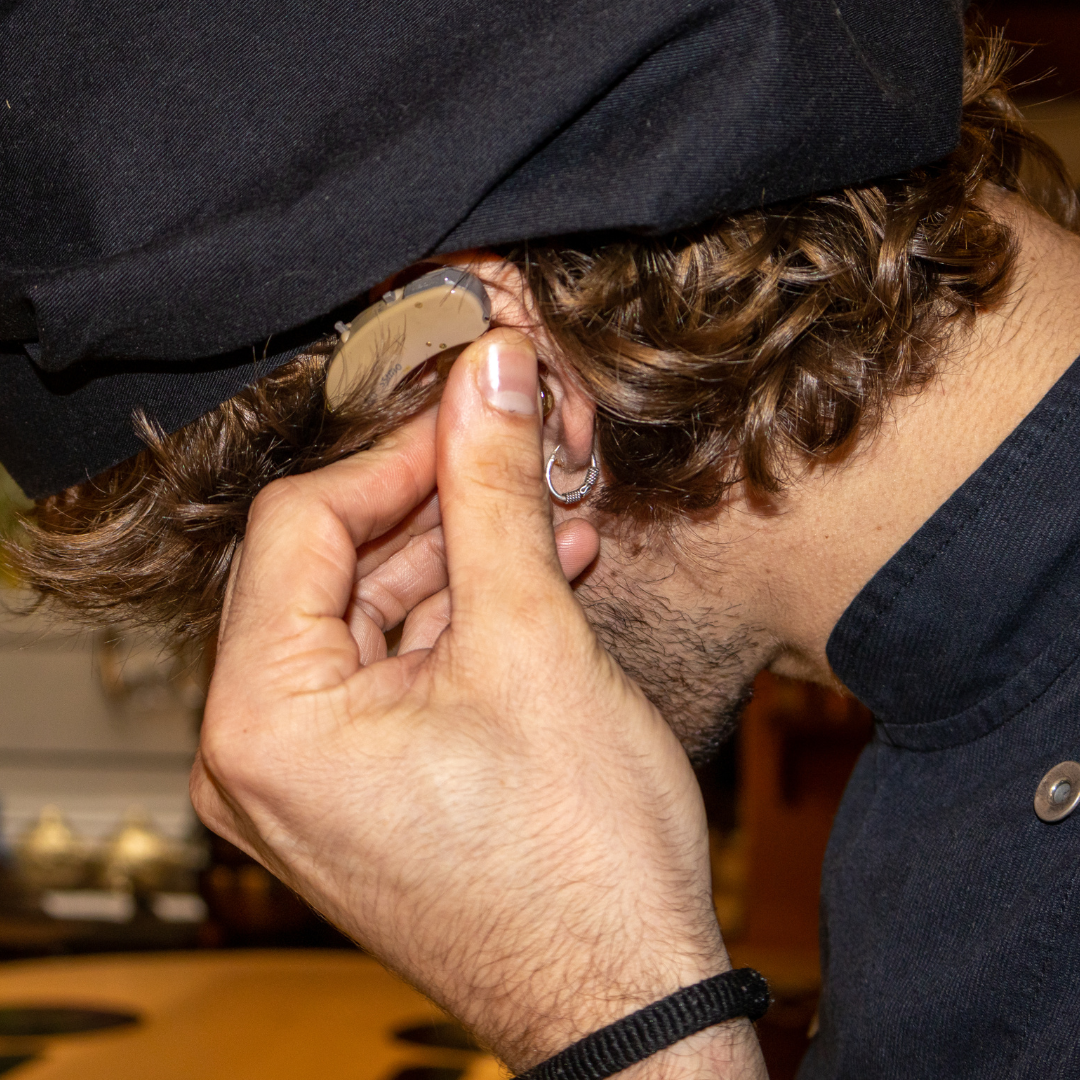
Restaurant conversations can be difficult to follow when environmental noise competes with your focus and hearing. We perform comprehensive diagnostic assessments to evaluate hearing in quiet rooms and challenging acoustic spaces to identify functional deficits. As soon as we identify the physiological cause of your difficult hearing, we deliver personalized rehabilitation options.
Understanding the Contrast Between Quiet Hearing and Restaurant Noise
In quiet conditions, an optimal signal-to-noise ratio ensures that the desired speaker sounds markedly clearer than surrounding sound. Modern restaurant environments create the complete opposite listening environment. Overlapping chatter, piped music, kitchen clatter, and hard-surface reverberation mask speech, forcing the brain to expend immense cognitive effort to track conversation.
Such difficulty frequently signals sensorineural high-frequency hearing loss, auditory processing dysfunction, or noise-induced cochlear damage. Poor visual illumination, mental fatigue, physical distance from the speaker, and divided focus exacerbate speech-recognition problems. Numerous individuals show standard hearing thresholds on paper but reveal marked comprehension drops on clinical speech-in-noise testing. Experiencing speech-recognition struggles in noisy dining venues warrants a formal audiological evaluation regardless of seemingly normal quiet hearing.
How Is High-Frequency Hearing Loss Diagnosed?
Our diagnostic process starts with a detailed case history reviewing problematic listening scenarios, occupational noise exposure, tinnitus, ototoxic medications, and familial genetics.
Clinical pure-tone audiometry identifies hearing threshold levels across various frequencies by delivering sounds through air and bone pathways. High-frequency hearing loss commonly presents on the audiogram as a characteristic precipitous drop in the higher frequency ranges. Extended test batteries incorporate acoustic tympanometry to rule out middle-ear pathology along with suprathreshold word-recognition testing.
Since sound-treated booths cannot replicate the chaos of a crowded dining room, speech-in-noise testing provides critical real-world insight. It measures how well you recognize words or sentences as competing sounds become louder. Together, these results show whether the problem involves audibility, speech clarity, background-noise processing, or a combination of factors.
Auditory Processing Disorders: Impact on Adult Communication
A diagnosed auditory processing disorder affects how the brain’s auditory cortex analyzes, organizes, and interprets sound. The peripheral auditory system may register sounds within normal limits, yet the brain falters when separating competing acoustic inputs, sorting speech sounds, or tracking fast speech. We first evaluate peripheral hearing and then determine whether an individualized auditory-processing test battery or referrals to other professionals are appropriate.
Effective Techniques to Hear Better in Noisy Surroundings
Targeted behavioral changes optimize the acoustic speech signal reaching your auditory system while providing clear visual context. Prioritize dining at establishments designed with subdued acoustics or reserve tables during non-peak business hours. Establishments designed with high-walled booths, acoustic wall treatments, heavy fabrics, and carpeting reduce reverberation far better than modern industrial spaces with bare surfaces.
In-venue communication guidelines:
- Ask for seating positioned far away from open kitchens, noisy bar areas, ceiling speakers, and large parties.
- Choose a seat with your back against a solid wall to block acoustic clutter originating from behind.
- Seat yourself facing conversation partners under clear, bright lighting to facilitate visual speechreading.
- Minimize the physical gap separating you and the person speaking as much as reasonably possible.
- Angle your stronger-hearing ear toward the primary individual you wish to converse with.
- Instruct conversational partners to reword missed phrases instead of repeating the entire sentence verbatim.
- Validate significant pieces of information directly rather than feigning understanding during dialogue.
- Step into a quiet area for a few minutes when listening fatigue begins to compromise focus.
- Ask companions to speak clearly at a natural pace.
- Raised or shouting voices warp acoustic phonetics and rarely improve speech intelligibility.
Assistive Listening Technologies for Noisy Environments
Determining the proper hearing technology hinges on the underlying disorder, everyday listening environments, and whether peripheral hearing loss is diagnosed. Prescription hearing aids fitted by an audiologist leverage directional microphone arrays, advanced digital noise reduction, and dedicated restaurant programs to focus on frontal speech while dampening background sound. Patients must uphold realistic expectations because modern amplification cannot strip out every ambient human voice completely.
Wireless remote microphones provide the most effective enhancement to real-world signal-to-noise ratios. Clipped near the speaker’s mouth or set nearby, the transmitter sends voice signals wirelessly to matched hearing aids or a receiver. This targeted setup effectively neutralizes the negative impacts of room distance and interfering background noise.
Other clinically valuable tools include:
- Dedicated table microphones engineered to capture small-group dialogue
- Hearing-loop telecoils that stream clean audio in loop-equipped establishments
- Smartphone speech-to-text or live-captioning applications
- Smart earbuds offering dedicated speech-in-noise amplification settings
- Acoustic sound-meter apps and dining review directories that score restaurant noise
Our audiology staff helps you evaluate options, ensures wireless compatibility, and trains you on operating your chosen equipment.
How an Audiologist or Physician Can Improve Hearing in Noise
A thorough audiological evaluation expands the diagnostic scope well past simple quiet listening performance. Our clinicians review the specific environments, vocal pitches, and decibel levels that trigger breakdowns to design a personalized test protocol. The diagnostic battery may encompass pure-tone thresholds, acoustic middle-ear evaluations, suprathreshold word recognition, and speech-in-noise measures. Dedicated central auditory-processing testing will be scheduled if your history and primary diagnostic testing indicate central pathway issues.
Sudden, one-sided, or rapidly worsening symptoms may require medical evaluation by an ear, nose, and throat physician. Comprehensive clinical care targets the physiological roots of hearing difficulties rather than simply writing them off as bad restaurant acoustics.
Contact Us for a Hearing Evaluation Today
If struggling through dinner conversation leaves you mentally exhausted, detached, or constantly guessing, schedule a complete hearing evaluation with our clinic. We provide proven treatments to enhance your hearing in noisy environments, offering hearing aid fine-tuning, specialized assistive accessories, and individualized auditory therapy.
Contact our practice today to book your consultation and take a decisive step toward reconnecting in social settings.